

Blog
How Our Microplastic Detection Kit Works: Enzyme-Based Fluorescence for PET, PBAT and PETG
Laboratories investigating microplastics need to understand both what a test can detect and what its results mean. Different analytical methods provide different information, so choosing a suitable approach starts with the target polymers, sample conditions and intended use.
Our 5mmLAB microplastic detection kit uses enzyme-based fluorescence to support the detection and semi-quantitative analysis of target polymers in water samples. This article focuses on PET, PBAT and PETG.
What Is Enzyme-Based Fluorescence Detection?
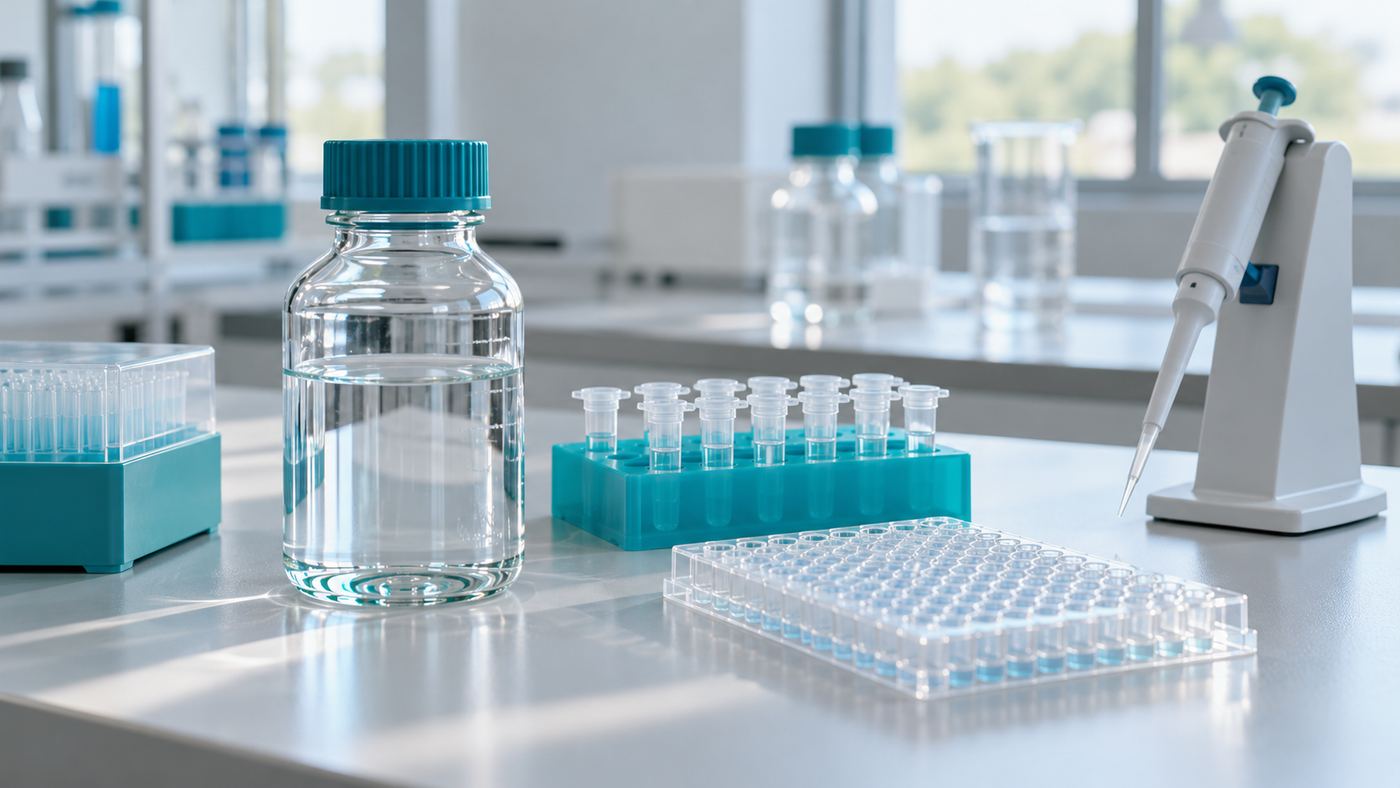
Enzyme-based fluorescence detection combines enzymatic degradation with a fluorescence measurement step.
In the 5mmLAB workflow, enzymes break down target plastic polymers to generate degradation products. Subsequent chemical reactions produce a measurable fluorescence signal. A fluorescence microplate reader measures this signal, which is then compared with a calibration curve to estimate the concentration of the target material.
The method measures a signal generated through the degradation and detection workflow. It does not rely on an enzyme changing shape and directly emitting light when it binds to a plastic particle.
How the Analysis Works
1. Sample Preparation
Water samples are prepared according to the kit protocol. Sample preparation requirements depend on the sample characteristics and the intended analysis.
2. Enzymatic Degradation
The prepared sample undergoes an enzymatic reaction that breaks down the target polymers and generates degradation products.
3. Fluorescence Development
The degradation products undergo subsequent chemical reactions that generate a fluorescence signal.
4. Fluorescence Measurement
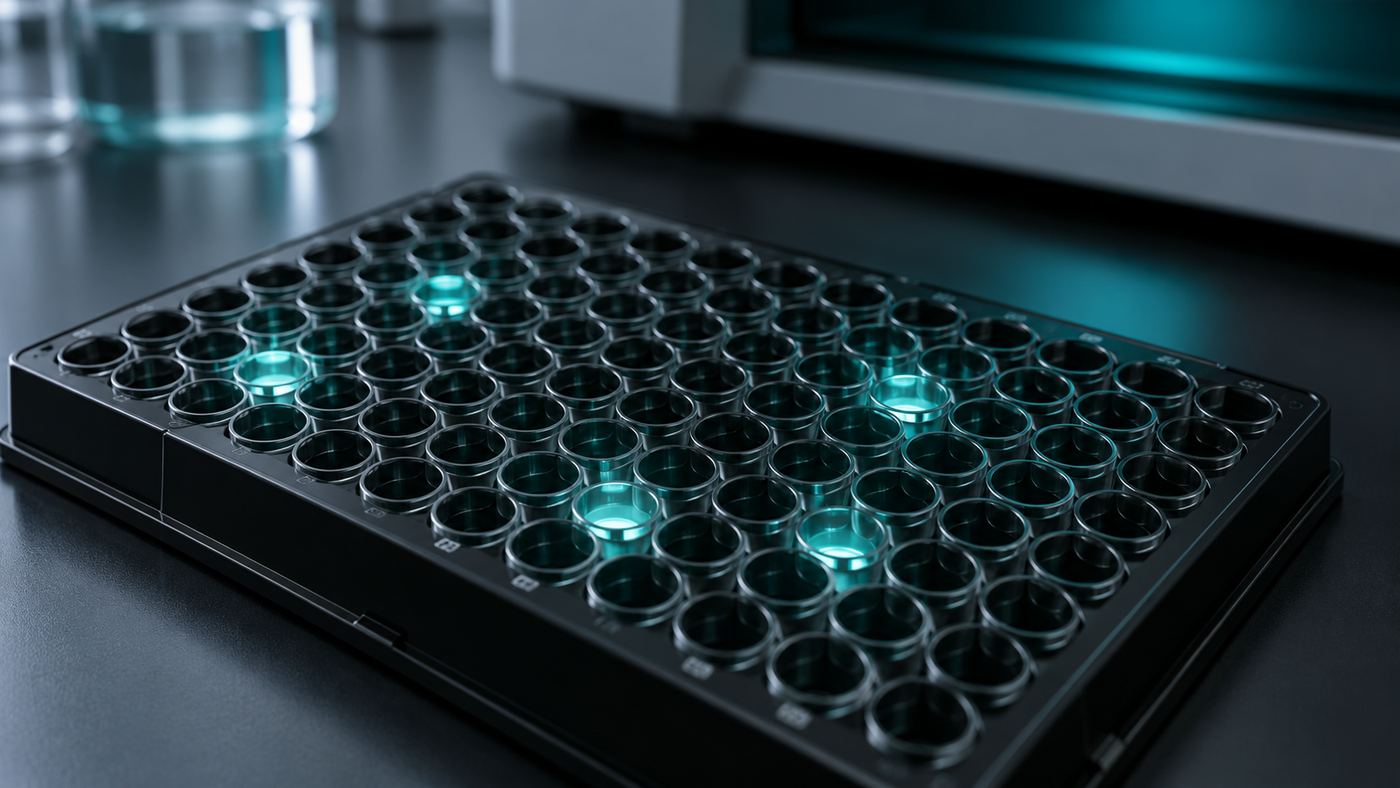
A compatible fluorescence microplate reader measures the signal under the conditions specified in the protocol.
5. Result Interpretation
The measured signal is compared with a standard calibration curve to obtain a semi-quantitative concentration result. Results should be interpreted within the kit's validated analytical scope and operating conditions.
A Microplastic Test Kit for Laboratory Water Analysis
The 5mmLAB microplastic test kit is designed for laboratory workflows using a fluorescence microplate reader and heating equipment.
Each kit supports the analysis of 30 samples across three runs. Processing multiple samples within a defined workflow can help laboratories organize in-house screening and comparative testing.
Potential applications include water quality investigations, contamination screening and filter performance studies. Before using the kit for a particular application, laboratories should confirm that the sample type, target polymers and preparation conditions are suitable for the assay.
Target Polymers and Analytical Scope
The target polymers covered in this article are:
- PET: Polyethylene terephthalate
- PBAT: Polybutylene adipate terephthalate
- PETG: Glycol-modified polyethylene terephthalate
The kit's scope should not be interpreted as universal detection of every plastic type. Suitability for other polymers requires separate evaluation.
Targeted detection also differs from identifying and measuring each polymer independently in a mixed sample. A fluorescence response should be interpreted using the applicable protocol, calibration and supporting validation data.
What the Results Tell You
The kit provides semi-quantitative concentration results based on a calibration curve.
These results should not be presented as a direct count of individual particles or a measurement of each particle's size and shape. If a study requires those outputs, laboratories should select additional analytical methods suited to those questions.
Sample composition and reaction conditions may affect assay performance. Following the prescribed preparation, reaction and measurement procedures is therefore important for interpreting results consistently.
Frequently Asked Questions
Which plastics can this microplastic detection kit test?
This article covers the kit's application to PET, PBAT and PETG. Detection of other polymers should not be assumed without supporting validation.
What equipment is required to use this microplastic test kit?
The workflow requires a compatible fluorescence microplate reader, heating equipment and the laboratory supplies specified in the kit instructions. Check the protocol for instrument settings and operating requirements before testing.
Can it be used as a microplastic identification kit?
The kit supports targeted detection within its specified polymer scope. It should not be interpreted as a universal microplastic identification kit that automatically determines every polymer present in an unknown sample.
Detecting target material does not, by itself, establish the separate identity or concentration of PET, PBAT and PETG in a mixture.
Does the kit provide quantitative results?
The reported output is a semi-quantitative concentration estimate based on a standard calibration curve. Interpretation depends on the calibration, sample preparation and assay conditions.
Can I use the kit for any environmental water sample?
Suitability should be assessed for the intended sample type. Contact 5mmLAB to discuss sample preparation and application requirements before extending the workflow to a new sample matrix.
Explore the 5mmLAB Kit
For kit specifications, workflow information and application inquiries, visit the 5mmLAB Microplastic Fluorescence Detection Kit product page.
Share your target polymers and sample type with our team to discuss whether the workflow is suitable for your laboratory.